 Image 1 of 1
Understanding Reflective Practice: A Practical Professional Growth Toolkit for Educators
Move beyond asking, “How did the lesson go?” Begin examining what students learned, what the evidence reveals, and what you will intentionally improve next.
Teaching requires educators to make hundreds of professional decisions each day. However, the demands of planning, instruction, assessment, meetings, administration, and classroom management often leave educators with limited structured time to examine the impact of those decisions.
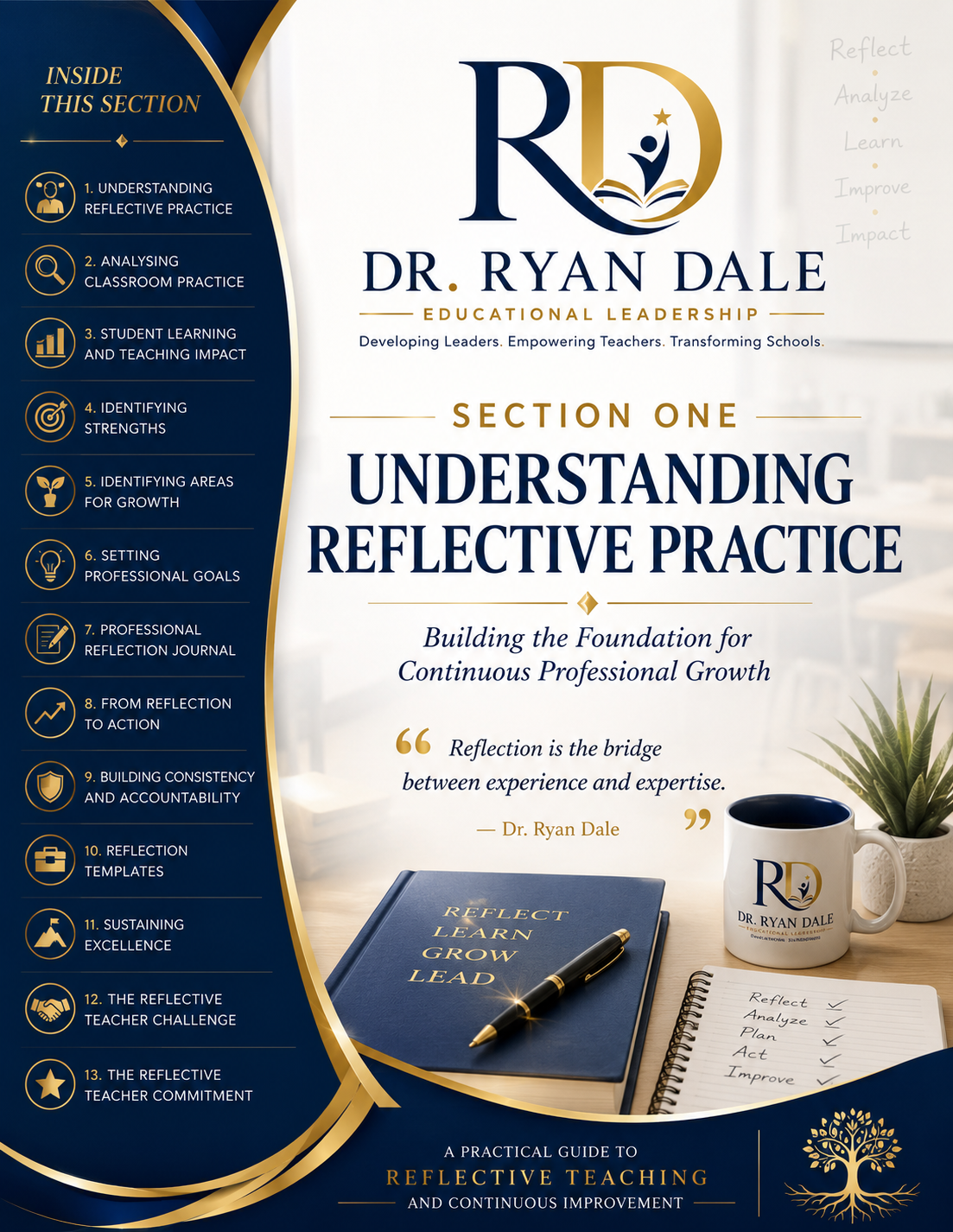
Understanding Reflective Practice was created to make reflection practical, purposeful, systematic, and manageable.
This 41 page digital professional development resource introduces educators to reflective practice as a disciplined process through which they examine evidence, evaluate instructional decisions, identify areas of strength, and select focused improvements that can positively influence student learning.
Rather than encouraging teachers to judge themselves or categorise lessons as simply “good” or “bad,” the resource helps educators distinguish between evaluating the teacher and evaluating the teaching. It promotes professional curiosity, evidence informed decision making, resilience, self awareness, and continuous improvement.
At the heart of this resource is a powerful principle:
Do not judge the teacher. Examine the teaching.
Through guided explanations, reflection prompts, visual frameworks, self assessment tools, and practical templates, educators are supported in moving from experience to insight and from insight to purposeful action.
What This Resource Covers
Participants will explore:
The meaning and purpose of reflective practice
Why experience alone does not guarantee professional growth
The relationship among reflection, evidence, action, and instructional improvement
The characteristics, dispositions, and habits of reflective educators
Methods for evaluating the impact of teaching on student learning
The distinction between professional reflection and personal self criticism
The ways in which teacher beliefs and professional confidence influence improvement
Strategies for identifying effective practices that should be sustained
Approaches for recognising instructional areas that require refinement
Methods for transforming reflection into a specific and achievable action plan
Processes for selecting appropriate evidence to measure improvement
Strategies for monitoring the quality and depth of professional reflection over time
What Is Included in the Download
This resource contains:
Research informed professional reading
The Dale Continuous Improvement Cycle
The Dale Reflective Practice Framework
The Dale Reflective Mindset
The Reflective Practice Scorecard
Guided lesson reflection activities
Evidence identification checklists
Prompts for identifying strengths and areas for improvement
Comparisons between professional reflection and personal self criticism
Instructional action planning pages
Progress review prompts
Printable reflection templates
Leadership insights
Practical questions designed to deepen professional thinking
What Educators Will Be Able to Do
After engaging with this resource, educators should be better prepared to:
Reflect objectively rather than relying solely on feelings or assumptions
Use evidence of student learning to evaluate instructional impact
Identify successful practices that should be sustained and repeated
Recognise misconceptions, barriers to learning, and missed instructional opportunities
Separate professional improvement from negative self judgement
Select one focused, relevant, and achievable improvement priority
Identify evidence that will demonstrate whether an instructional change has been effective
Develop more thoughtful, responsive, and informed instructional decisions
Strengthen professional confidence through deliberate learning and reflection
Integrate reflective practice into their regular teaching routines
Who This Resource Is For
This toolkit is suitable for:
Classroom teachers
Early career teachers
Experienced educators
Student teachers
Teacher mentors
Instructional coaches
Heads of department
Curriculum leaders
Deputy principals
Principals
Professional learning communities
Teacher education programmes
Schools developing coaching, supervision, or appraisal systems
The resource may be used independently, during coaching conversations, as part of professional development sessions, or within a structured school improvement programme.
Ways to Use the Resource
The resource may be used as:
An individual professional reflection workbook
A staff professional development resource
A coaching and mentoring tool
A post observation reflection guide
A professional learning community discussion resource
A teacher induction resource
A leadership development activity
A structured professional journal
A school improvement planning support tool
Why This Resource Is Different
Many reflection tools ask educators merely to describe what happened. This resource goes further by guiding teachers through a deliberate and systematic process:
Reflect
Gather evidence
Analyse practice
Identify one improvement
Implement the change
Evaluate the impact
Refine practice
Repeat the process
The emphasis is not on achieving perfection. Instead, it is on making thoughtful, evidence informed improvements that strengthen teaching and learning over time.
A Professional Resource to Revisit
This is not a resource that should be completed once and then forgotten. Educators can return to the reflection activities, scorecards, prompts, and action planning pages after different lessons, units, observations, coaching conversations, or professional development experiences.
Each use can generate new insights, identify emerging priorities, and create new opportunities for professional growth.
Reflection is the bridge between experience and expertise.
Move beyond asking, “How did the lesson go?” Begin examining what students learned, what the evidence reveals, and what you will intentionally improve next.
Teaching requires educators to make hundreds of professional decisions each day. However, the demands of planning, instruction, assessment, meetings, administration, and classroom management often leave educators with limited structured time to examine the impact of those decisions.
Understanding Reflective Practice was created to make reflection practical, purposeful, systematic, and manageable.
This 41 page digital professional development resource introduces educators to reflective practice as a disciplined process through which they examine evidence, evaluate instructional decisions, identify areas of strength, and select focused improvements that can positively influence student learning.
Rather than encouraging teachers to judge themselves or categorise lessons as simply “good” or “bad,” the resource helps educators distinguish between evaluating the teacher and evaluating the teaching. It promotes professional curiosity, evidence informed decision making, resilience, self awareness, and continuous improvement.
At the heart of this resource is a powerful principle:
Do not judge the teacher. Examine the teaching.
Through guided explanations, reflection prompts, visual frameworks, self assessment tools, and practical templates, educators are supported in moving from experience to insight and from insight to purposeful action.
What This Resource Covers
Participants will explore:
The meaning and purpose of reflective practice
Why experience alone does not guarantee professional growth
The relationship among reflection, evidence, action, and instructional improvement
The characteristics, dispositions, and habits of reflective educators
Methods for evaluating the impact of teaching on student learning
The distinction between professional reflection and personal self criticism
The ways in which teacher beliefs and professional confidence influence improvement
Strategies for identifying effective practices that should be sustained
Approaches for recognising instructional areas that require refinement
Methods for transforming reflection into a specific and achievable action plan
Processes for selecting appropriate evidence to measure improvement
Strategies for monitoring the quality and depth of professional reflection over time
What Is Included in the Download
This resource contains:
Research informed professional reading
The Dale Continuous Improvement Cycle
The Dale Reflective Practice Framework
The Dale Reflective Mindset
The Reflective Practice Scorecard
Guided lesson reflection activities
Evidence identification checklists
Prompts for identifying strengths and areas for improvement
Comparisons between professional reflection and personal self criticism
Instructional action planning pages
Progress review prompts
Printable reflection templates
Leadership insights
Practical questions designed to deepen professional thinking
What Educators Will Be Able to Do
After engaging with this resource, educators should be better prepared to:
Reflect objectively rather than relying solely on feelings or assumptions
Use evidence of student learning to evaluate instructional impact
Identify successful practices that should be sustained and repeated
Recognise misconceptions, barriers to learning, and missed instructional opportunities
Separate professional improvement from negative self judgement
Select one focused, relevant, and achievable improvement priority
Identify evidence that will demonstrate whether an instructional change has been effective
Develop more thoughtful, responsive, and informed instructional decisions
Strengthen professional confidence through deliberate learning and reflection
Integrate reflective practice into their regular teaching routines
Who This Resource Is For
This toolkit is suitable for:
Classroom teachers
Early career teachers
Experienced educators
Student teachers
Teacher mentors
Instructional coaches
Heads of department
Curriculum leaders
Deputy principals
Principals
Professional learning communities
Teacher education programmes
Schools developing coaching, supervision, or appraisal systems
The resource may be used independently, during coaching conversations, as part of professional development sessions, or within a structured school improvement programme.
Ways to Use the Resource
The resource may be used as:
An individual professional reflection workbook
A staff professional development resource
A coaching and mentoring tool
A post observation reflection guide
A professional learning community discussion resource
A teacher induction resource
A leadership development activity
A structured professional journal
A school improvement planning support tool
Why This Resource Is Different
Many reflection tools ask educators merely to describe what happened. This resource goes further by guiding teachers through a deliberate and systematic process:
Reflect
Gather evidence
Analyse practice
Identify one improvement
Implement the change
Evaluate the impact
Refine practice
Repeat the process
The emphasis is not on achieving perfection. Instead, it is on making thoughtful, evidence informed improvements that strengthen teaching and learning over time.
A Professional Resource to Revisit
This is not a resource that should be completed once and then forgotten. Educators can return to the reflection activities, scorecards, prompts, and action planning pages after different lessons, units, observations, coaching conversations, or professional development experiences.
Each use can generate new insights, identify emerging priorities, and create new opportunities for professional growth.
Reflection is the bridge between experience and expertise.